Singapore's Elderly Bear Heaviest Losses as Scams Evolve: Police
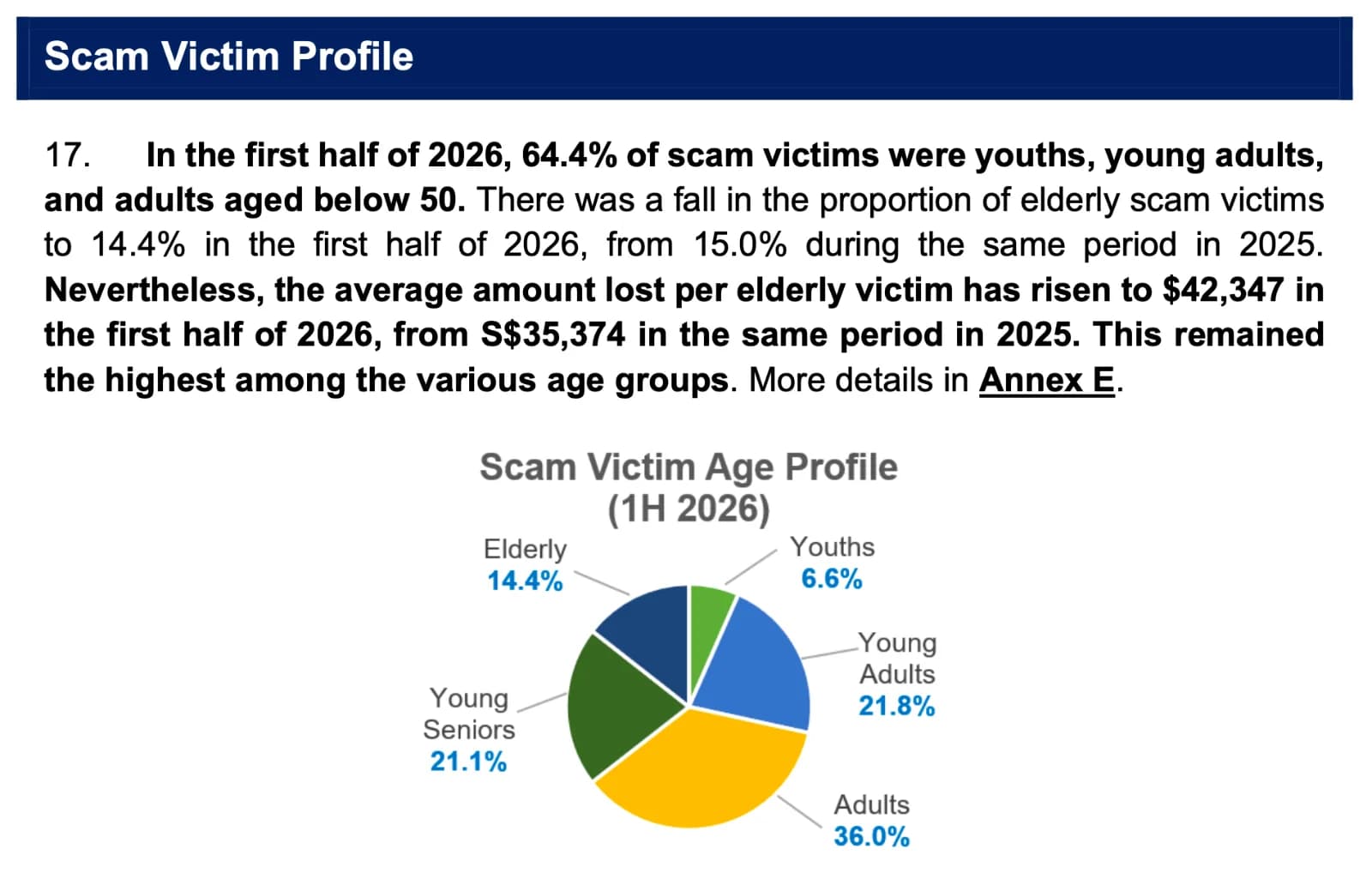
Elderly victims aged 65 and above made up 14.4% of all scam victims in the first six months of the year, down from 15.0% a year ago. Yet the average amount lost per elderly victim rose to S$42,347 from S$35,374 in the same period last year — the highest among all age groups.
SINGAPORE, Aug 27 - Singapore's overall scam numbers fell in the first half of 2026, but the elderly continue to bear the heaviest financial brunt, with average losses rising sharply even as their share of victims shrank, the Singapore Police Force said in its Mid-Year Scam and Cybercrime Brief 2026.
Elderly victims aged 65 and above made up 14.4% of all scam victims in the first six months of the year, down from 15.0% a year ago. Yet the average amount lost per elderly victim rose to S$42,347 from S$35,374 in the same period last year, the highest among all age groups.
By contrast, 64.4% of victims were youths, young adults and adults below 50, who typically lost far smaller sums. The median loss across all scam cases fell 19.8% to S$1,350, while 69.5% of cases involved losses under S$5,000.

Why the elderly lose more
The brief highlights a pattern: the elderly are disproportionately targeted by high-value confidence scams.
Of the elderly victim pool, 23% fell prey to investment scams and 14.5% to phishing scams, but the biggest damage came from government officials impersonation scams, which ranked second for total losses nationwide at S$90.8 million.
Police said a continuing trend is driving losses: victims being instructed to make ATM cash deposits and physically hand over cash and valuables to scammers. In one emerging variant, scammers impersonate telecoms, payment firms or insurers like Singtel, YouTrip and Prudential, then transfer the victim to a fake government official from the Ministry of Law, the Monetary Authority of Singapore or the SPF itself.
Fake friend call scams, where scammers hijack WhatsApp accounts and ask contacts for emergency loans, also hit elderly victims hard, accounting for 66.6% of social media impersonation cases.
Focused outreach
The SPF said it has placed a greater focus on the elderly in 2026 given the disproportionate impact.
Public education has shifted to channels preferred by seniors, television, radio, newspapers, Active Ageing Centres and ServiceSG centres, with messaging built around "stop and check" and featuring elderly faces in campaign materials.
New upstream protections were also flagged: the discontinuation of the PayNow nickname feature from June 6 to prevent impersonation, passkeys for Singpass from July 1 to combat phishing, and a pilot for a single recognisable number prefix for all SPF calls to help the public verify legitimate government contact.
The report noted that 4.7% of all scam cases involved losses of at least S$100,000, a category where elderly victims are overrepresented.
Despite the 17.9% fall in total scam losses to S$410.6 million, police said the high average loss among seniors remains a national concern and will require tighter anti-scam measures on designated online services and deeper community engagement.