Meta Platforms Accounted for More Than a Third of Singapore Scam Cases in First Half of 2026, Police Report Shows
While police disruption efforts intensified, with over 37,500 WhatsApp lines and 31,600 online monikers taken down, scammers continue to exploit Meta's social reach and messaging scale to run e-commerce, job and investment scams — using Facebook ads to lure victims before shifting them to WhatsApp groups for the final con.
SINGAPORE, Aug 27 - Three products from Meta Platforms remain the single largest cluster of channels exploited for scams in Singapore, accounting for 34.1% of all scam cases in the first half of 2026, according to the Singapore Police Force's Mid-Year Scam and Cybercrime Brief 2026.
The report, released this month, shows an overall improvement in the scam situation, with total scam cases falling 14.4% to 16,821 and losses falling 17.9% to S$410.6 million. Yet online platforms continued to be the first point of contact for the majority, 89.0%, of victims.
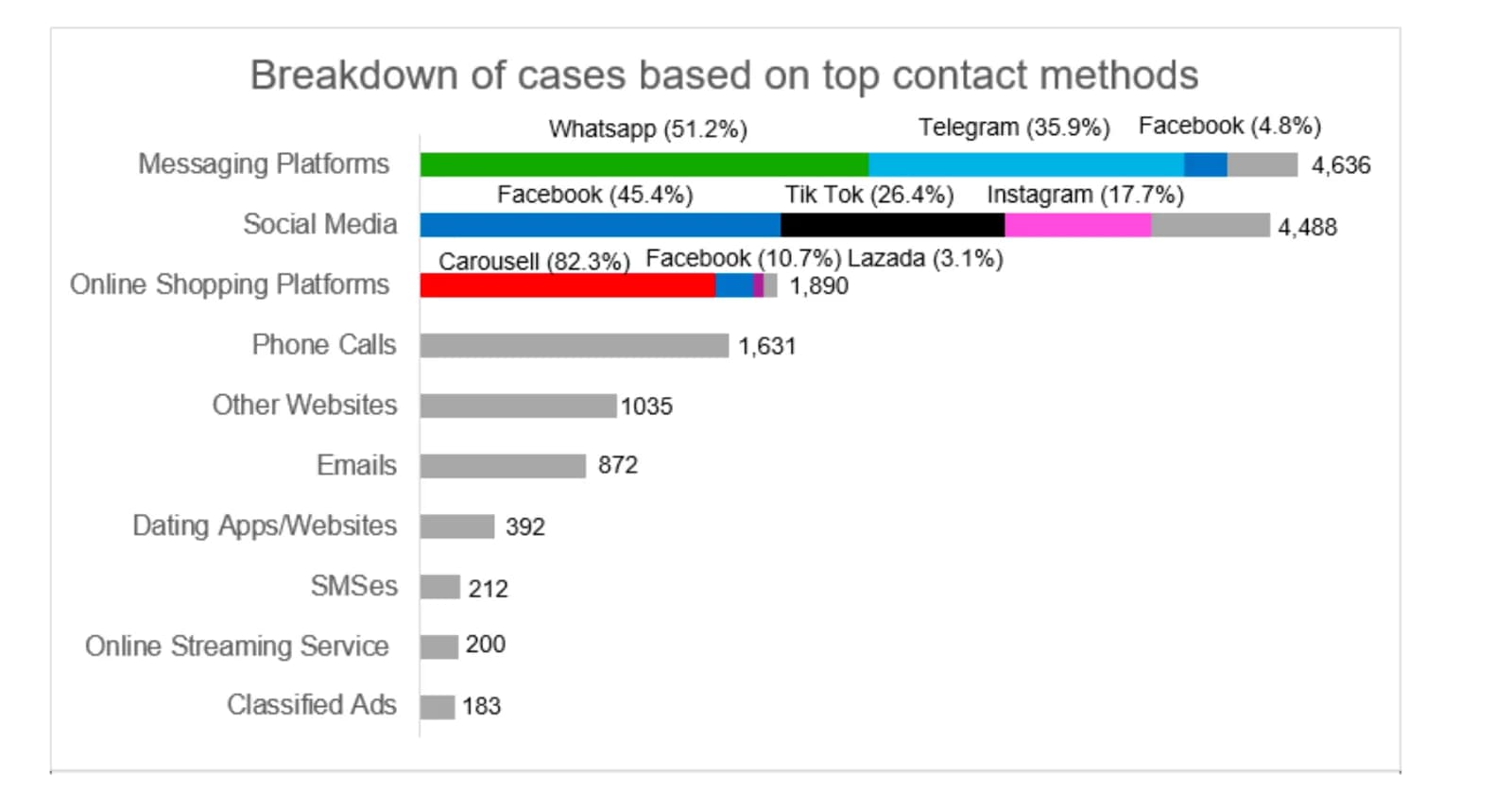
Social media and messaging platforms were the top two contact methods, at 26.7% and 27.6% respectively.
Within that ecosystem, Meta's products remain of particular concern, the report states:
- Facebook, WhatsApp and Instagram combined made up 34.1% of total scam cases reported across all platforms.
- Of scam cases where contact occurred via social media, 45.4% were contacted through Facebook, 26.4% through TikTok and 17.7% through Instagram. Facebook cases on that channel fell 35.9% year-on-year, while Instagram fell 10.3%.
- On messaging platforms, scam cases fell 2.0% overall to 4,636 cases. Cases perpetrated on WhatsApp fell 6.6%, while WeChat fell 33.0% and Telegram fell 2.1%.
- For job scams, which ranked fourth for total losses at S$34.9 million, WhatsApp and Facebook were the most common platforms scammers used to contact victims.
The brief details how the platforms are being weaponized. Scammers use Facebook, TikTok and Instagram listings, paid advertisements and direct messages to offer fake e-commerce deals, investment tips and work-from-home jobs. Victims are then moved to WhatsApp groups masquerading as investment learning communities or task-based job portals. A new variant noted by police involves social media boosting scams, where victims are asked to like, follow or boost posts and product listings for commissions before being asked to pay to unlock higher earnings.
E-commerce scams, the top scam type by case volume at 3,865 cases, increasingly start on social feeds before payment is solicited via messaging apps.
Disruption and enforcement
The Singapore Police Force said it disrupted more than 37,500 WhatsApp lines in the first half of 2026, up more than 13% from over 33,300 in the same period last year, and more than 31,600 online monikers and advertisements, up more than 46% from over 21,600.

In total, police disrupted 47,500 scam-related mobile lines, 37,500 WhatsApp lines, 31,600 online monikers and advertisements, and 52,200 malicious websites.
The shift reflects a broader move away from traditional telephony. While mobile lines disrupted fell by 19% as telcos tightened registration, WhatsApp lines, online monikers and websites all saw double-digit increases.
Regulatory tightening
The report notes that Implementation Directives have been issued to Apple, Google and Meta under the Online Criminal Harms Act to combat impersonation scams.
On 17 August 2026, Codes of Practice were issued to designated online service providers to tighten anti-scam requirements. The new COP for Social Media Services requires prompt removal of published advertisements where there is reason to suspect furtherance of a scam and verification that advertisers for financial services are licensed by the Monetary Authority of Singapore.
For messaging services, a separate COP will now apply to Apple iMessage, Google Messages and Google Meet, alongside existing providers.
The Ministry of Home Affairs has proposed legislative amendments to empower the Competent Authority to impose penalties of up to S$10 million for non-compliance with the Codes and Implementation Directives, the report said.
The police also said the scam detection tool SATIS, powered by GovTech Singapore, now analyzes over 600,000 websites daily and has doubled its monthly disruption rate to more than 15,000 malicious sites.
Despite the decline in case numbers, police said scams remain the dominant crime type in Singapore. Carousell was the only designated online service to register an increase in scam cases, up 17.1% to 1,555.