Varun Dhawan Deepfake Order: India's Landmark Blueprint for AI Likeness Law
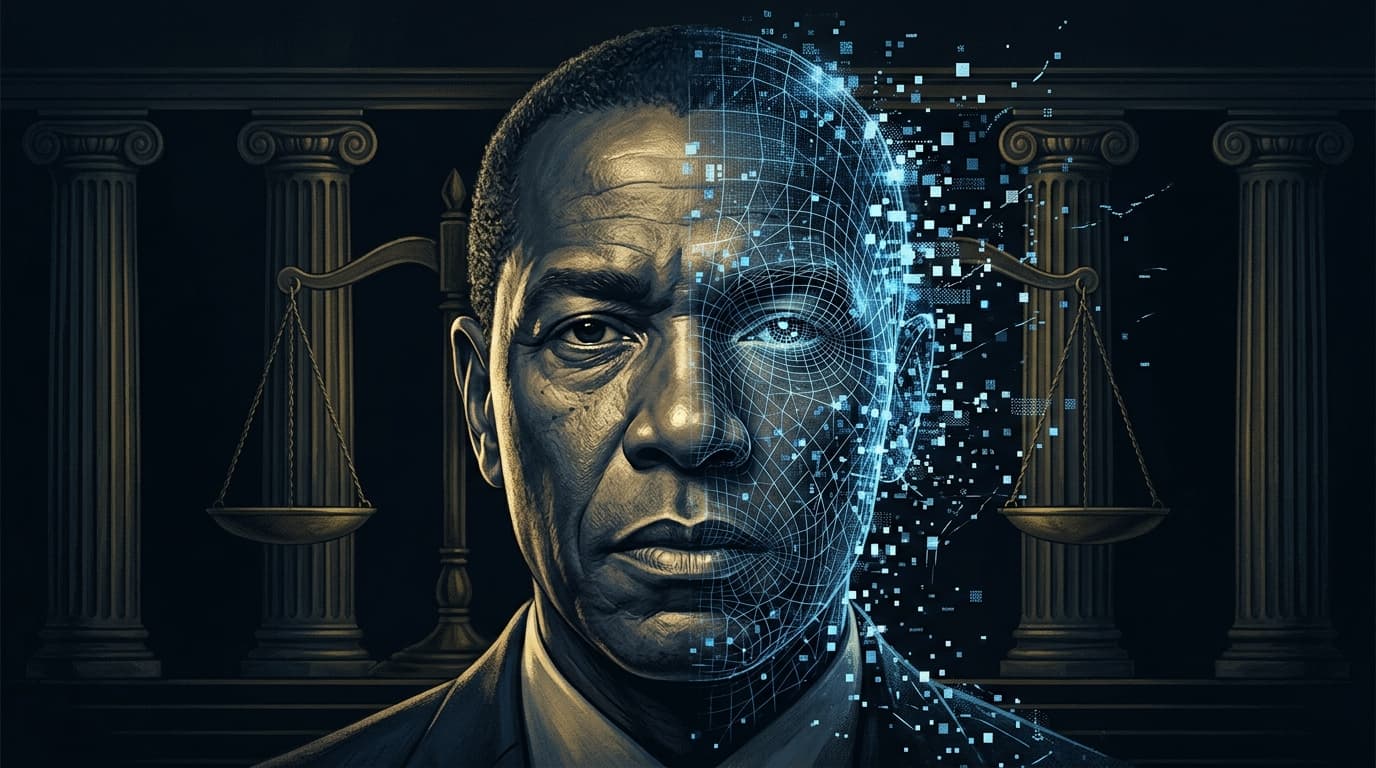
The Delhi High Court's order shielding Varun Dhawan from AI deepfakes caps a run of Indian rulings that now lead the world on personality-rights protection.
The Delhi High Court has ordered the takedown of AI-generated deepfakes, fake advertisements and unauthorised merchandise exploiting the actor Varun Dhawan, and in doing so has added another brick to what is quietly becoming the world's most aggressive judicial defence of personal identity against synthetic media. The interim order, passed by Justice Jyoti Singh and reported in early June 2026, is unremarkable on its own. It matters because it is the latest in an almost unbroken line of Indian rulings that have built a fast, claimant-friendly template for personality-rights protection, one that legislators in the United States and Europe are still struggling to draft.
What the court ordered
The court held that Dhawan's name, likeness, voice, image and signature are attributes of his persona that no third party may exploit for commercial or personal gain without consent. It restrained a range of websites, e-commerce listings and social-media intermediaries, and issued two directions that show how far Indian courts will now go:
- Subscriber disclosure. Google, Meta and X Corporation were directed to hand over the Basic Subscriber Information of the users behind the infringing content, turning a takedown into a route to the people responsible, not just the posts.
- A 36-hour clock. Intermediaries must remove any newly identified infringing material within 36 hours of being notified by the actor, a standing, forward-looking remedy rather than a one-time sweep.
The infringing material ranged from AI deepfake videos to counterfeit merchandise and fake endorsements, the now-familiar toolkit for monetising a celebrity's face without permission.
A pattern, not a one-off
The reason this order is a case study rather than a celebrity headline is the company it keeps. Over four years, the Delhi High Court has turned itself into the world's busiest forum for personality-rights injunctions:
- Amitabh Bachchan v. Rajat Nagi (2022) restrained unauthorised commercial use of the actor's name, image and voice, an early signal that Indian courts would protect persona attributes even without a dedicated statute.
- Anil Kapoor v. Simply Life India (2023) produced what is widely regarded as India's first blanket personality-rights injunction expressly covering AI-generated content, protecting even his "Jhakaas" catchphrase.
- Jackie Shroff (2024) extended protection to merchandise, apps and other commercial exploitation of his name and image.
- December 2025 brought a fresh wave, with NTR Jr. R. Madhavan and Shilpa Shetty among the stars winning orders against synthetic images, audio and video of their likeness.
Aishwarya Rai, Arijit Singh and Asha Bhosle sit on the same list. The Dhawan order is, in effect, a well-worn judicial template applied once more, which is exactly why it is instructive.
Why the Indian approach is distinctive
India has no dedicated personality-rights statute. Courts have instead woven the protection from existing principles, the common-law tort of passing off, trademark and publicity rights, and, crucially, Article 21's guarantee of dignity and privacy. The result is a regime with three features few jurisdictions combine: speed (interim relief in weeks), breadth (name, voice, image, catchphrase and AI replicas all covered), and reach (orders that bind global platforms and unnamed "John Doe" infringers).
The judiciary is no longer working alone. In February 2026, India's Ministry of Electronics and IT brought amended Intermediary Rules into force, introducing the concept of "Synthetically Generated Information" (SGI), AI-made audio or video that appears authentic. Platforms must now label SGI with visible and audio disclosures, embed cryptographic identifiers that trace content to its origin, and act on takedowns within tight deadlines. The courts supply the remedies; the rules supply the plumbing.
India versus the world
Measured against its peers, India's blend of fast case law and prescriptive rules stands out:
- European Union: the AI Act (2024) mandates transparency and watermarking of AI content, but enforcement is administrative and still ramping up.
- United States: there is no federal likeness law; protection is a patchwork of state right-of-publicity statutes. More than 1,200 AI bills were introduced across the states in 2025, with roughly 145 enacted, including Washington's SB 5886 extending publicity rights to AI-generated likenesses.
- China: standard GB 45438-2025, effective since September 2025, imposes the most technically prescriptive labelling-and-logging regime in the world.
- South Korea: the AI Basic Act, in force since January 2026, reaches foreign firms serving the Korean market.
The contrast is one of delivery. Where much of the West is legislating in slow motion, an Indian public figure can approach the Delhi High Court and emerge, days later, with an enforceable order binding Google, Meta and X. For victims of non-consensual deepfakes, disproportionately women, that speed is the entire point.
Why it travels beyond Bollywood
Strip away the film-star names and the Dhawan order is a working answer to a question every country is now asking: how do you protect an ordinary person's face and voice when anyone can synthesise them in minutes? India's answer, treat identity as a protectable right, make platforms disclose and delete on a clock, and back it with traceability rules, is becoming a reference model. The cases began with celebrities because they had the means to litigate first; the principles they establish are general. That is what turns a Bollywood injunction into a landmark, and why courts and lawmakers far outside India are watching.
Frequently Asked Questions
Does India have a law specifically protecting against deepfakes?
Not a single dedicated statute. Protection comes from a combination of court-developed personality and publicity rights, the IT Act and its 2026 Intermediary Rules amendment on Synthetically Generated Information, and constitutional privacy and dignity protections under Article 21.
What did the Varun Dhawan order actually require?
It restrained unauthorised use of his name, likeness, voice, image and signature; ordered platforms to take down deepfakes, fake ads and counterfeit merchandise; directed Google, Meta and X to disclose the infringers' subscriber information; and required intermediaries to remove newly flagged content within 36 hours.
Why is it called a landmark?
Because it consolidates a repeatable judicial template, fast, broad, platform-binding personality-rights relief against AI content, that is more developed than the statutory regimes of most Western countries, positioning India as an early model for the rest of the world.
Sources
- Delhi High Court orders takedown of AI deepfakes of Varun Dhawan [MediaNama]
- Delhi High Court protects personality rights of actor Varun Dhawan [Deccan Herald]
- Deepfakes and Dignity: The New Battle for Celebrity Rights in India [LiveLaw]
- India's Recent Celebrity Deepfake Lawsuits [National Law Review]