Cyber Frauds hit Electric Companies - WhatsApp Impersonation Scam of ₹45.6 Lakh targeting PGVCL’s Finance Head in Rajkot
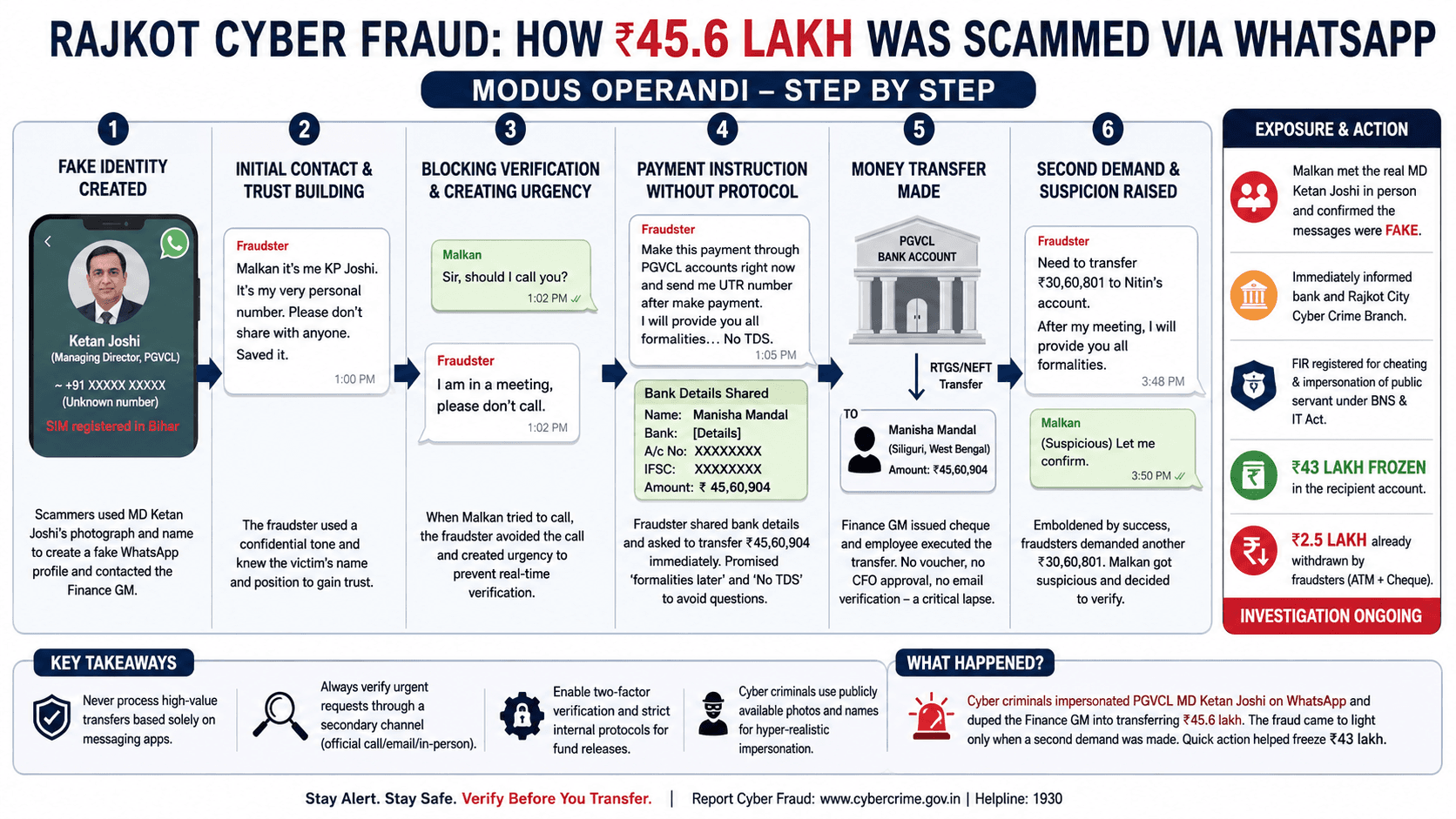
Cyber criminals orchestrated a sophisticated WhatsApp impersonation scam by creating a fake profile of PGVCL Managing Director Ketan Joshi and messaging Finance GM Kintukumar Malkan from an unknown number, claiming it was a “personal” contact.
Rajkot, May 7, 2026: In a chilling reminder of how sophisticated cyber criminals are now targeting government officials through everyday messaging apps, scammers impersonating Paschim Gujarat Vij Company Limited (PGVCL) Managing Director Ketan Joshi (also referred to as K.P. Joshi, IAS) duped the company’s General Manager (Finance), Kintukumar Shashikant Malkan, into transferring ₹45.60 lakh from official accounts. The fraud, which unfolded on May 4, was exposed only when a second demand for over ₹30 lakh raised red flags. Police have since frozen ₹43 lakh, but ₹2.5 lakh was already withdrawn by the fraudsters.
Setup: WhatsApp Impersonation
The scammers began by setting up a fake WhatsApp account using Ketan Joshi’s official photograph as the profile picture and displaying his name. They used an unknown mobile number (later traced to a SIM registered in Bihar) to contact Malkan directly. Around 1 pm on May 4, Malkan received the first message:
“Malkan it’s me KP Joshi. It’s my very personal number. Please don’t share with anyone. Save it.”
The message was crafted to sound personal and confidential, exploiting the hierarchical trust within the organisation. The fraudsters knew the victim’s name and position, indicating prior reconnaissance.
Building Urgency and Blocking Verification
When Malkan attempted to call the number to confirm, the scammers cleverly deflected suspicion. According to the complaint and police briefing by Deputy Commissioner of Police (Crime) Jagdish Bangarwa, the fraudster responded with messages such as:
“I am in a meeting, please don’t call.”
This prevented any real-time voice verification while maintaining the illusion of authenticity. Minutes later, the scammers escalated to the core demand. They shared bank account details belonging to one “Manisha Mandal” and instructed:
“Make this payment through PGVCL accounts right now and send me UTR number after make payment. I will provide you all formalities… No TDS.”
The amount specified was precisely ₹45,60,904, a figure likely chosen to appear legitimate and urgent. The promise of “formalities later” and exemption from TDS was designed to override any procedural doubts.
Malkan, believing the request came from his boss, prepared a cheque and dispatched an employee to execute the RTGS/NEFT transfer from PGVCL’s accounts. No voucher was created, no sanction was obtained from the Chief Financial Officer (CFO), and no official email or documented approval was sought, a critical lapse that the MD later described as unprecedented at the utility.
Second Demand and the Moment of Suspicion
After a successful attempt, the fraudsters returned at 3:48 pm with another demand: ₹30,60,801 to an account linked to “Nitin.” The follow-up message read:
“After my meeting, I will provide you all formalities.”
This time, Malkan grew suspicious. Instead of complying immediately, he walked a few metres down the corridor in the same PGVCL headquarters building in Laxminagar, Rajkot, and met the real Ketan Joshi face-to-face. Joshi categorically denied sending any WhatsApp messages or authorising any transfers. He confirmed the number did not belong to him. The duo immediately alerted the bank and the Rajkot City Cyber Crime Branch.
Police Crackdown and Money Trail
An FIR was registered under relevant sections of the Bharatiya Nyaya Sanhita (BNS) for cheating and impersonation of a public servant, along with provisions of the Information Technology Act. The recipient account (linked to Manisha Mandal) was traced to Siliguri, West Bengal.
Quick action by the cyber cell resulted in ₹43 lakh being frozen in the account. However, the fraudsters had already managed to withdraw ₹2.5 lakh through a combination of ATM transactions and a cheque. Investigations are ongoing to trace further layering of funds, with police planning to obtain KYC details and possibly travel to Siliguri. DCP Jagdish Bangarwa stated at a press conference: “Malkan mistook the number for the MD’s personal contact and proceeded with the transfer. No negative role of the complainant has come to light, but we appeal to everyone to cross-check the identity of anyone before transferring money.”